
India's eight core infrastructure sectors experienced a slowdown in production growth, reaching a two-month low of 4% in January. Crude oil and natural gas output declined, while refinery products remained flat. Overall growth for the April-January period was also lower compared to the previous fiscal year.

Production growth in India's eight core infrastructure sectors slowed to a three-month low of 2.3 per cent in February, impacted by contractions in crude oil, natural gas, and refinery products output.

What may come as a dampener to the much-touted "feel-good factor" in the economy before the Lok Sabha elections, the infrastructure growth slowed down to 4.7 per cent during the first 10 months of this fiscal from 5.8 per cent

Sharp dip in output of natural gas and fertilisers led to the decline.
The six core infrastructure industries -- crude oil, petroleum refinery products, coal, electricity, cement and finished carbon steel-- had registered a growth rate of 3.6 per cent in January 2008.

Sectors which recorded positive growth were coal, refinery products and fertiliser.

India's eight key infrastructure sectors grew at a slower pace of 1.8 per cent in November against 5.8 per cent in the same month last year, amid a dip in production of crude oil, natural gas, refinery products, and electricity, according to official data released on Monday.
Slow growth in petroleum products production, coal and electricity generation dragged down the growth of six key infrastructure industries to 3% during October as opposed to a healthy growth of 6.7% registered in the same month last year.

In October 2015, the sectors had witnessed a growth of 3.2 per cent.
The growth in production of eight key infrastructure sectors slowed down to a 20-month low of 4 per cent in June this year due to a decline in the output of crude oil and refinery products, according to official data released on Wednesday. The core sectors' production grew by 6.4 per cent in May 2024. The growth of core sectors -- coal, crude oil, natural gas, refinery products, fertiliser, steel, cement and electricity -- was 8.4 per cent in June 2023.

The growth rate in September was highest since May when it was 4.4%.

The growth of eight key infrastructure sectors slowed to a 14-month low of 3.8 per cent in December 2023, on account of poor performance of sectors like crude oil, electricity, steel and cement, according to the official data released on Wednesday. The core sector (coal, crude oil, natural gas, refinery products, fertiliser, steel, cement and electricity) growth in November was 7.9 per cent. It was 8.3 per cent in December 2022.

The growth of eight key infrastructure sectors slowed down to 4.3 per cent in May 2023 due to a decline in the production of crude oil, natural gas and electricity, according to the data released by the government on Friday. The core sector growth was 19.3 per cent in May 2022, while in April 2023, the key infra sectors recorded a growth rate of 4.3 per cent. During April-May this fiscal, the output growth of these eight sectors slowed down to 4.3 per cent against 14.3 per cent in the year-ago period, the data showed.

Coal, crude oil, natural gas, cement, and electricity recorded a negative growth of 8.6 per cent, 5.4 per cent , 3.9 per cent, 4.9 per cent and 2.9 per cent, respectively, in August.

The growth of eight key infrastructure sectors slowed down to a 4-month low of 8.1 per cent in September 2023 against 8.3 per cent a year ago, according to the official data released on Tuesday. The growth rate in the output of refinery products, fertiliser, cement and electricity during the month under review has decelerated, while it was negative in the case of crude oil. The previous low was in May, when the growth rate of these sectors stood at 5.2 per cent.

Shares of Indian life insurance companies, particularly SBI Life Insurance and Canara HSBC Life Insurance, saw significant declines after the Department of Financial Services (DFS) secretary, M Nagaraju, stated that banks are being asked to avoid exclusive tie-ups with their own insurance subsidiaries and instead remain neutral.

The output of eight core infrastructure sectors contracted to six-month low of 4.5 per cent in July against 9.9 per cent in the year-ago period, according to official data released on Wednesday. The output of these infrastructure sectors expanded by 13.2 per cent in June, 19.3 per cent in May, 9.5 per cent in April, 4.8 per cent in March, 5.9 per cent in February and 4 per cent in January. The production growth of eight infrastructure sectors -- coal, crude oil, natural gas, refinery products, fertiliser, steel, cement and electricity -- was 11.5 per cent in April-July this fiscal against 21.4 per cent a year ago.

Infrastructure major Larsen & Toubro (L&T) reported a 3 per cent year-on-year decline in consolidated net profit for Q4 FY26, reaching 5,325.60 crore, primarily due to exceptional gains in the previous year. Despite this, the company's consolidated order book surged by 28 per cent to 7.4 trillion, with international orders accounting for 52 per cent.
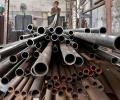
Growth of eight key infrastructure sectors slowed down to 8.2 per cent in June 2023 compared to the year-ago month due to a decline in the production of crude oil, according to the official data released on Monday.

Production of coal, crude oil, natural gas, refinery products, fertiliser, steel, cement and electricity contracted. The record contraction in the growth rate of eight core sectors will affect the Index of Industrial Production.

The stock of automative major Eicher Motors hit its all-time high on Wednesday, capping the year with gains of about 52.7 per cent. It has comfortably outperformed its sector index, the Nifty Auto, which jumped 22.7 per cent, as well as the benchmark Nifty, which rose 10 per cent during this period.

However, production of coal, crude oil and natural gas declined in April this year.
Eight infrastructure industries have posted a growth rate of 8 per cent for September on account of good performance by crude oil, steel and electricity sectors.
Coal, crude oil, natural gas, refinery products, fertiliser, steel, cement and comprise 40.27 per cent of the weight of items included in the Index of Industrial Production.

Contracting for the ninth consecutive month, the output of eight core infrastructure sectors dropped by 2.6 per cent in November, mainly due to decline in production of natural gas, refinery products, steel and cement. The production of eight core sectors had recorded a growth of 0.7 per cent in November 2019, data released by the commerce and industry ministry showed on Thursday. Barring coal, fertiliser and electricity, all sectors -- crude oil, natural gas, refinery products, steel and cement -- recorded negative growth in November 2020.

The record contraction in the growth rate of eight core sectors will have its impact on IIP.

The production of eight infrastructure sectors rose by 7.5 per cent in October on healthy performance by the segments of coal, natural gas, refinery products and cement, official data released on Tuesday showed. The output of eight core sectors of coal, crude oil, natural gas, refinery products, fertilisers, steel, cement and electricity had contracted by 0.5 per cent in October 2020, according to the data released by the commerce and industry ministry. Core sectors' growth stood at 4.5 per cent in September this year.

NSO has pegged economic growth at 5 per cent in 2019-20 in its second advance estimates.

Fertiliser production dropped sharply by 11.5 per cent, crude oil by 5 per cent and natural gas by 0.9 per cent in October over the year-ago month

Barring fertiliser, all seven sectors -- coal, crude oil, natural gas, refinery products, steel, cement and electricity -- recorded negative growth in July.

The output of eight core sectors jumped by 56.1 per cent in April mainly due to a low base effect and uptick in production of natural gas, refinery products, steel, cement and electricity, official data released on Monday showed. The eight infrastructure sectors of coal, crude oil, natural gas, refinery products, fertilisers, steel, cement and electricity had contracted by 37.9 per cent in April 2020 due to lockdown restrictions imposed to control the spread of coronavirus infection. In March this year, the eight sectors had recorded a growth rate of 11.4 per cent.

Barring fertiliser, all seven sectors - coal, crude oil, natural gas, refinery products, steel, cement, and electricity - had recorded negative growth in May.

Fresh order wins for capital goods and industrial companies may have seen a major slump due to Lok Sabha polls in the first quarter of the current financial year (Q1FY25). At the same time, revenue and profit growth trajectory is expected to have stayed the course, according to brokerage firms. Elara Capital, Motilal Oswal, and InCred Equities expect this sector universe to report a 12- 21 per cent growth in revenue, 21 -36 per cent growth in Ebitda and 24-38 per cent growth in profit on a year-on-year (Y-oY) basis.

Institutional investments in Indian real estate have seen a strong start to 2025, with inflows reaching $ 1.3 billion in the first quarter - a 31 per cent year-on-year (YoY) increase. This growth was primarily driven by domestic investments, which accounted for 60 per cent of the total inflows during the quarter. With $ 0.8 billion inflows, domestic investments saw a 75 per cent annual rise and were largely focused on industrial & warehousing and office segments.

'Future market gains will likely depend primarily on earnings growth.'

The growth was primarily driven by domestic investments, which accounted for 60 per cent of the total inflows during the first quarter of the financial year.

The SBI report, however, said the economic growth rate will pick up pace in 2020-21 to 6.2 per cent.

The number of ultra-high net worth individuals (UHNWIs) in India is expected to rise 58.4 per cent in the next five years from 12,069 in 2022 to 19,119 in 2027, a report by property consultancy Knight Frank said on Wednesday. In its "The Wealth Report 2023", Knight Frank said that the number of Indian UHNWIs, with a net worth of $30 million or above, fell 7.5 per cent in 2022 due to economic slowdown, rate hikes, appreciation of the US dollar and geopolitical uncertainties. Globally, the number of UHNWIs fell 3.8 per cent in 2022 compared to 2021.

The Reserve Bank of India's (RBI's) caution on inflation, highlighted during the recent monetary policy meeting, may put investors' faith in fast moving consumer goods (FMCG) stocks to test, analysts said. They, however, believe FMCG stocks may ride through this near-term investor anxiety as related companies are, typically, well-equipped to handle inflation due to their pricing power and steady demand for essential goods.

Barring coal and fertiliser, all sectors -- crude oil, natural gas, refinery products, steel, cement and electricity -- recorded negative growth in August.
 © 2026 Rediff.com - Advertise with us - Disclaimer - Privacy Policy - Sitemap - Feedback - About us - Terms of use - Grievances